
As electric vehicles (EVs) continue to develop, fast charging technology has become one of the most important factors influencing EV adoption. Drivers and fleet operators expect shorter charging times, higher energy efficiency, and longer battery life. However, increasing charging speed also creates a major technical challenge: heat generation inside the battery pack.
During high-power fast charging, lithium-ion batteries experience increased current flow, which generates significant heat. Without an efficient Battery Thermal Management System (BTMS), excessive heat can reduce charging efficiency, accelerate battery aging, and affect overall battery safety.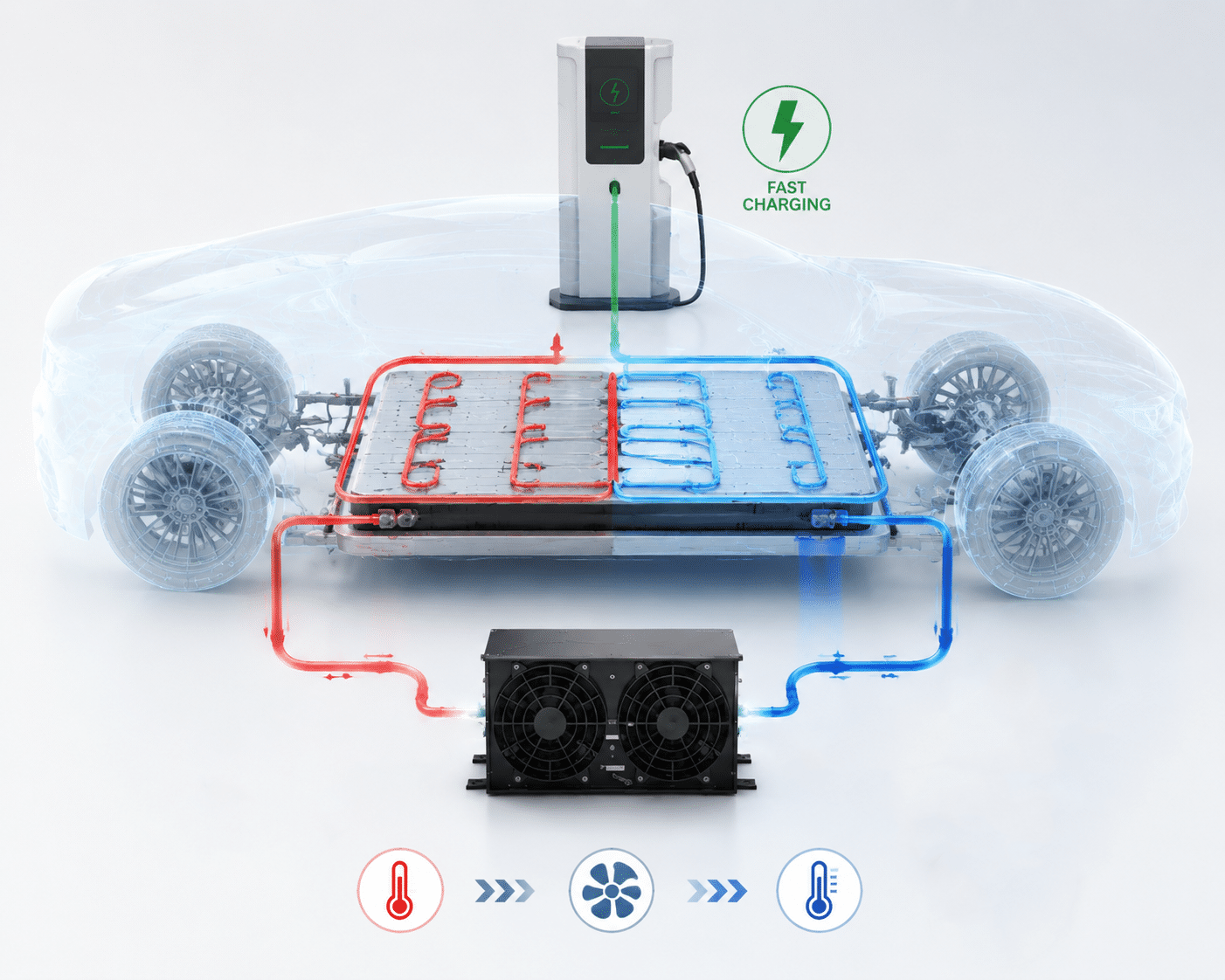
Fast charging works by delivering a higher amount of electrical energy into the battery within a shorter period. While this significantly reduces charging time, the increased charging current causes higher internal resistance losses inside battery cells.
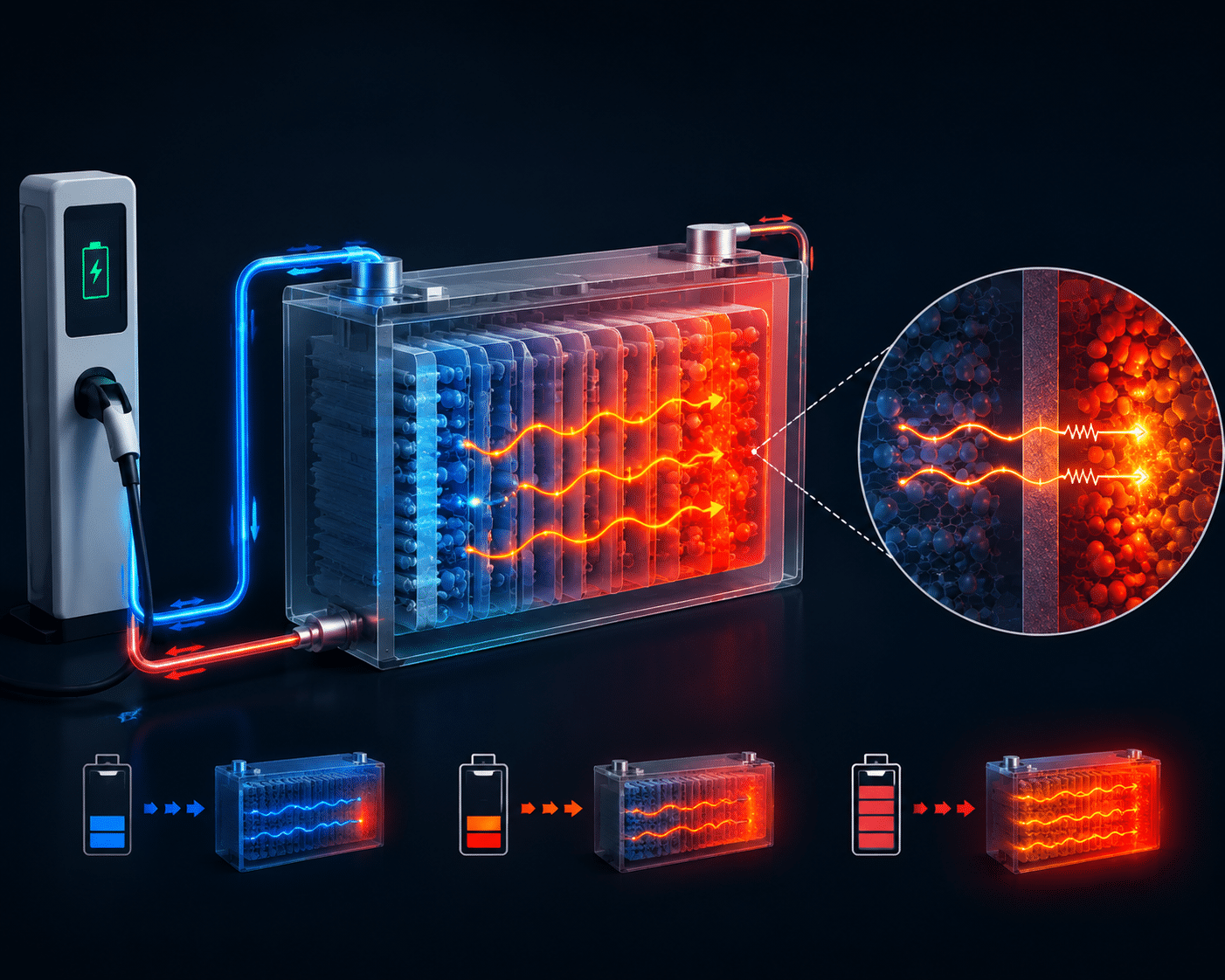

A reliable EV Battery Thermal Management System has three major functions:
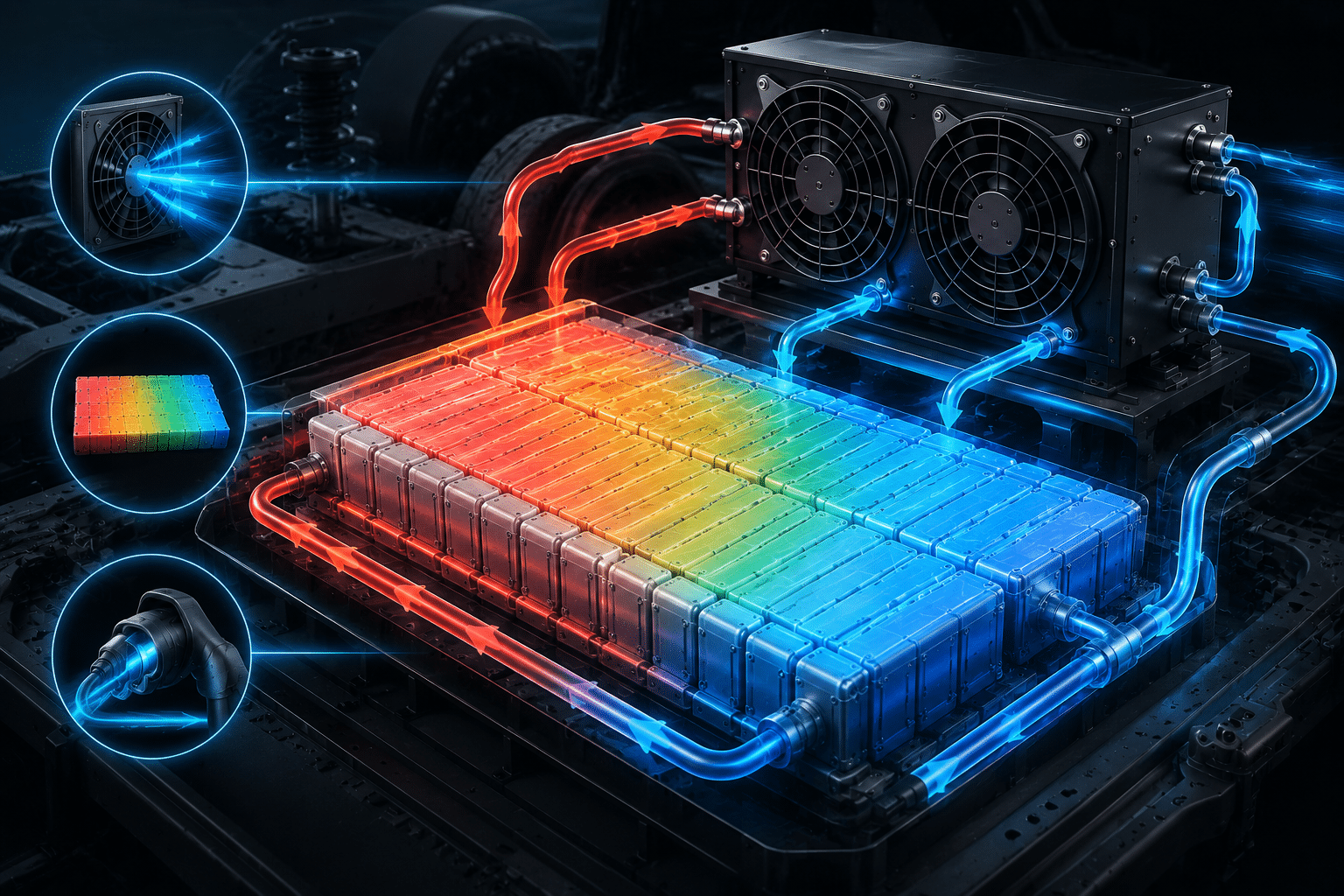
Compared with traditional air cooling solutions, liquid cooling provides significantly higher heat transfer efficiency and better temperature control.
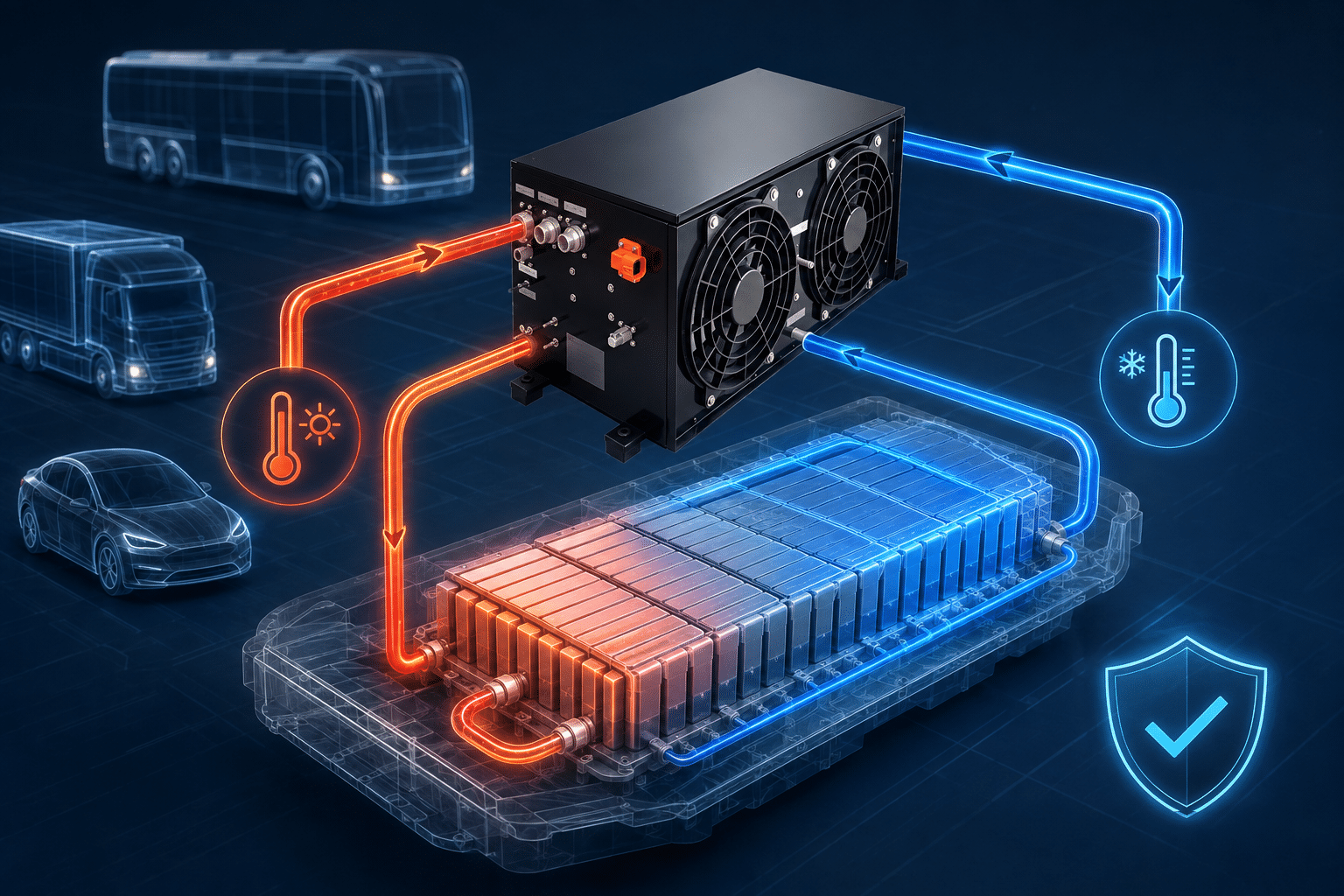
A Liquid Cooling Battery Thermal Management System uses coolant circulating through specially designed cooling channels or cooling plates to absorb and remove heat from battery cells.
The main advantages include:
Research has shown that liquid cooling systems are widely considered an effective solution for EV battery thermal management, especially for applications with high thermal loads and fast charging requirements.
Among different liquid cooling solutions, the cooling plate plays a critical role in battery heat dissipation.
A high-performance battery cooling plate is designed to:
By integrating optimized flow channels and lightweight structures, advanced liquid cooling plates help battery manufacturers achieve better thermal performance while maintaining compact system design.
V.Applications of Liquid Cooling Battery Thermal Management Systems
Liquid cooling BTMS solutions are widely used in:
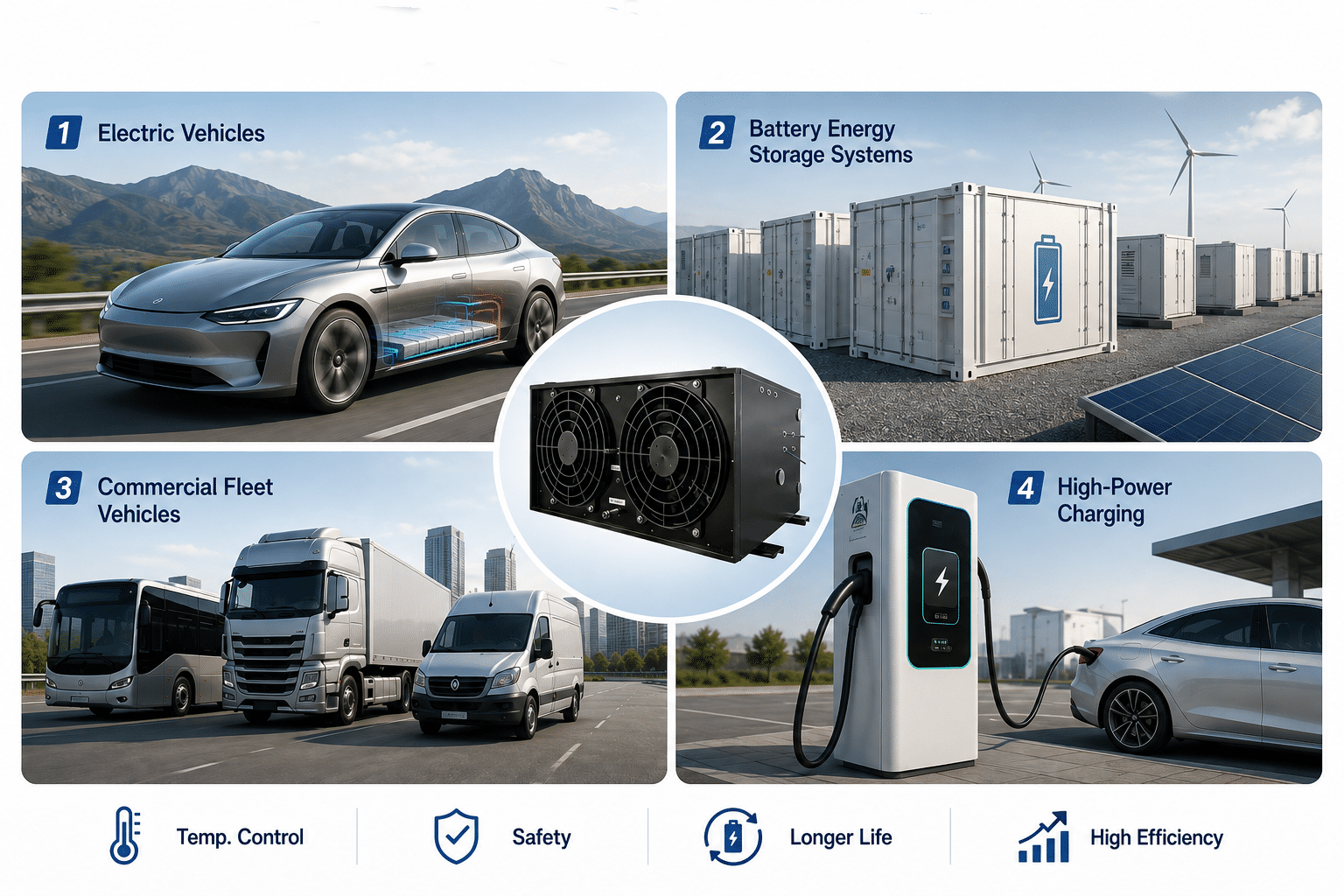
Including passenger EVs, commercial vehicles, buses, and high-performance electric vehicles.
Large-scale energy storage systems require reliable thermal control to maintain safety and operational efficiency.
Electric buses, trucks, and logistics vehicles often require fast charging capability and stable battery performance.
Fast charging environments create higher thermal requirements, making liquid cooling technology increasingly important.
For battery manufacturers, EV suppliers, and new energy companies, selecting an effective thermal management solution is critical for product competitiveness.
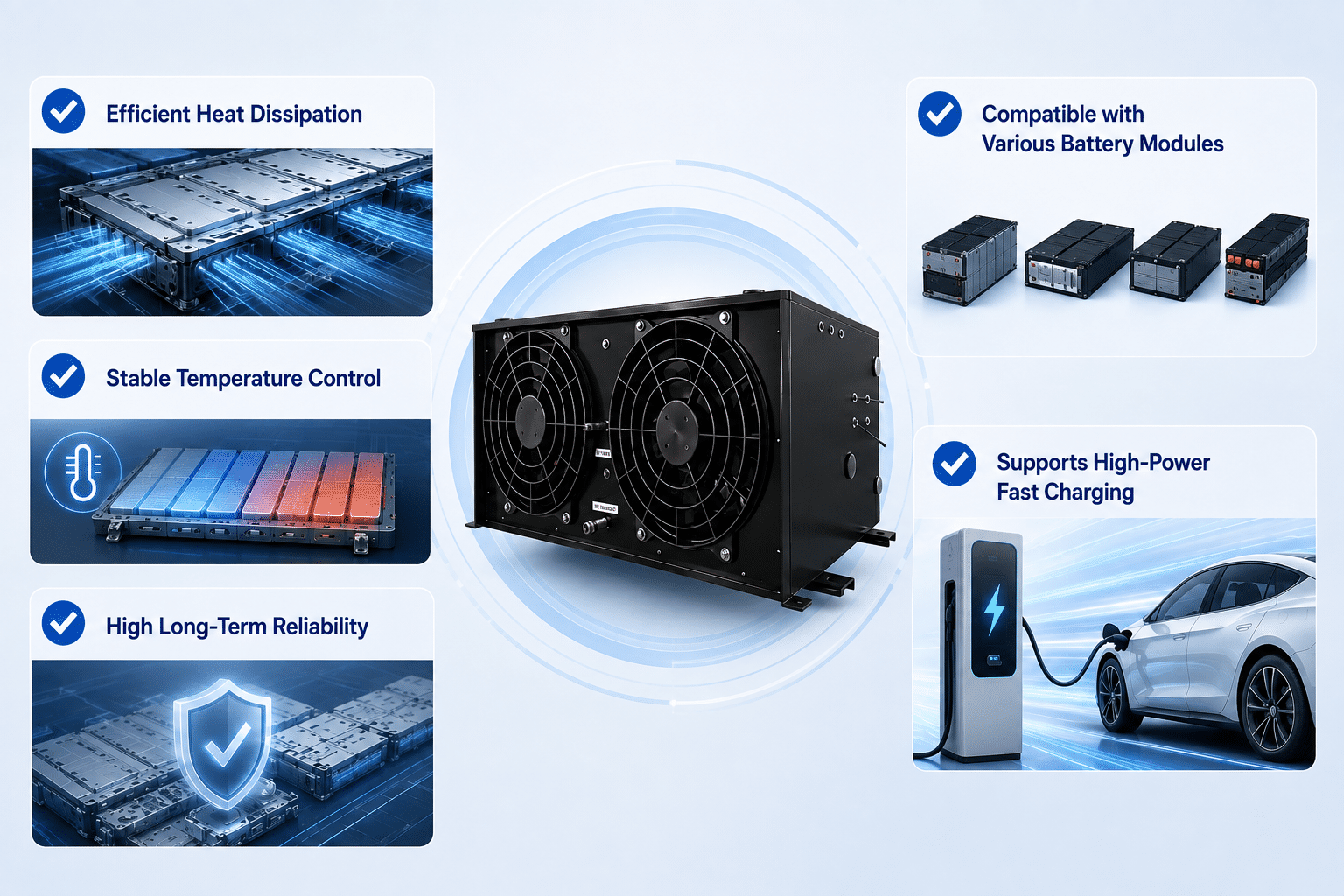
A reliable liquid cooling battery thermal management system should provide:
✔ High heat dissipation efficiency
✔ Stable temperature control
✔ Long-term reliability
✔ Compatibility with different battery modules
✔ Support for high-power fast charging applications
VII.Future Trends: Liquid Cooling Will Become Essential for Next-Generation Batteries
As EV batteries continue moving toward higher energy density and faster charging speeds, thermal management technology will play an increasingly important role.
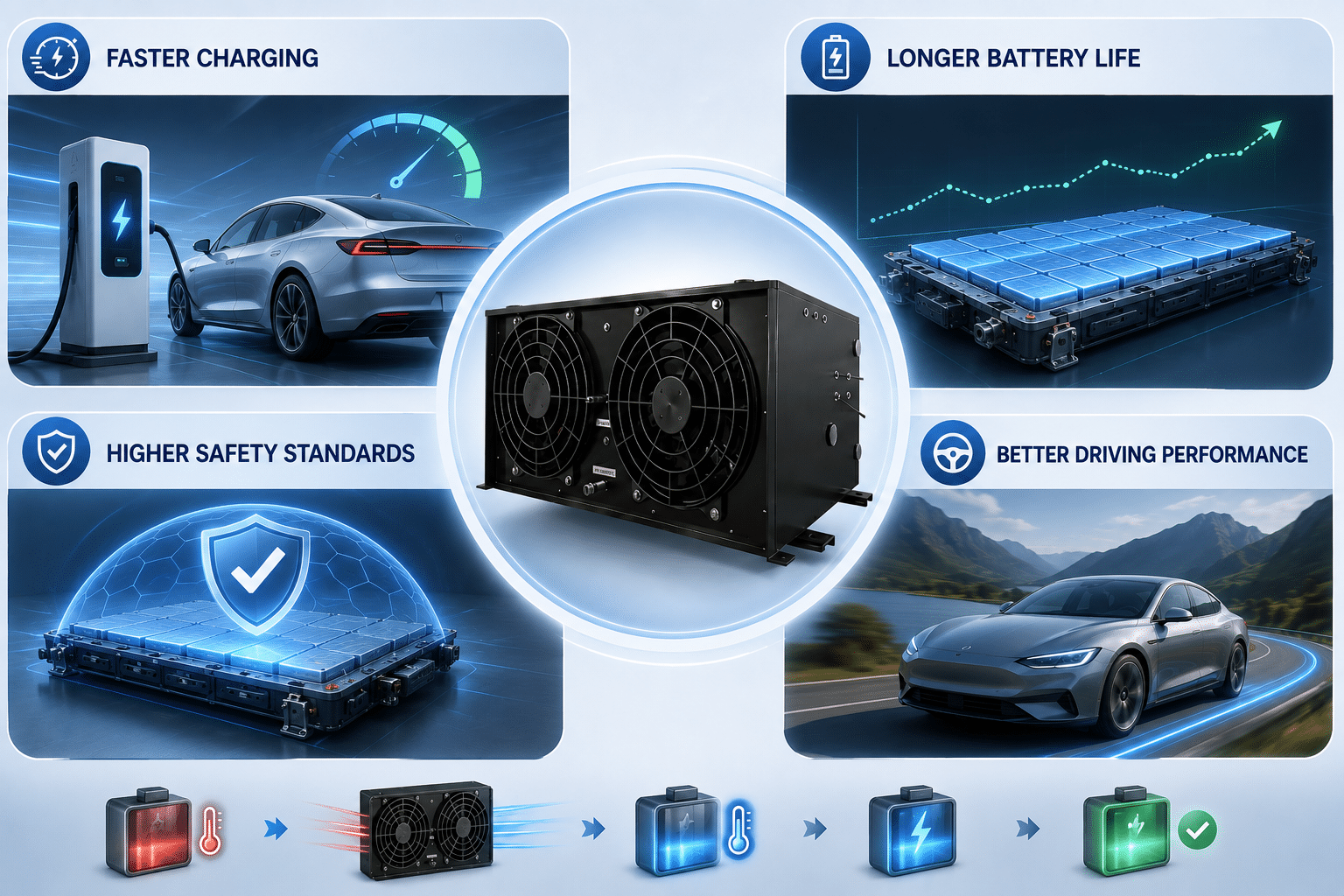
Future battery systems will require more efficient cooling solutions to balance:
For battery manufacturers and EV companies, adopting advanced liquid cooling battery thermal management systems is becoming a key strategy to improve product competitiveness in the rapidly growing electric mobility market.
Fast charging brings significant benefits to electric vehicles, but it also creates greater thermal challenges. Effective battery cooling is no longer optional — it is a necessary technology for achieving safe, reliable, and efficient EV performance.
With advantages in cooling efficiency, temperature uniformity, and high-power charging support, liquid cooling battery thermal management systems with advanced cooling plates are becoming one of the most important solutions for the future of electric mobility.
If you would like to learn more about battery thermal management systems, please click the link below.
https://www.tkthvac.com/products/battery-cooling-system1/tkt-battery-thermal-management-system.html



.jpg)
.jpg)