
The global transition toward electric public transportation is accelerating as cities and governments seek cleaner and more efficient mobility solutions. Electric buses have become a key part of sustainable transportation strategies due to their zero-emission operation and lower long-term energy costs.
However, unlike passenger electric vehicles, electric buses face much more demanding operating conditions. They typically operate for extended hours every day, carry heavy passenger loads, experience frequent acceleration and braking, and require high-power charging during limited downtime.
Under these conditions, battery performance becomes one of the most critical factors affecting electric bus reliability. The battery pack must deliver stable power output while maintaining safety, efficiency, and long service life.
This is where a Battery Thermal Management System (BTMS) plays a vital role.
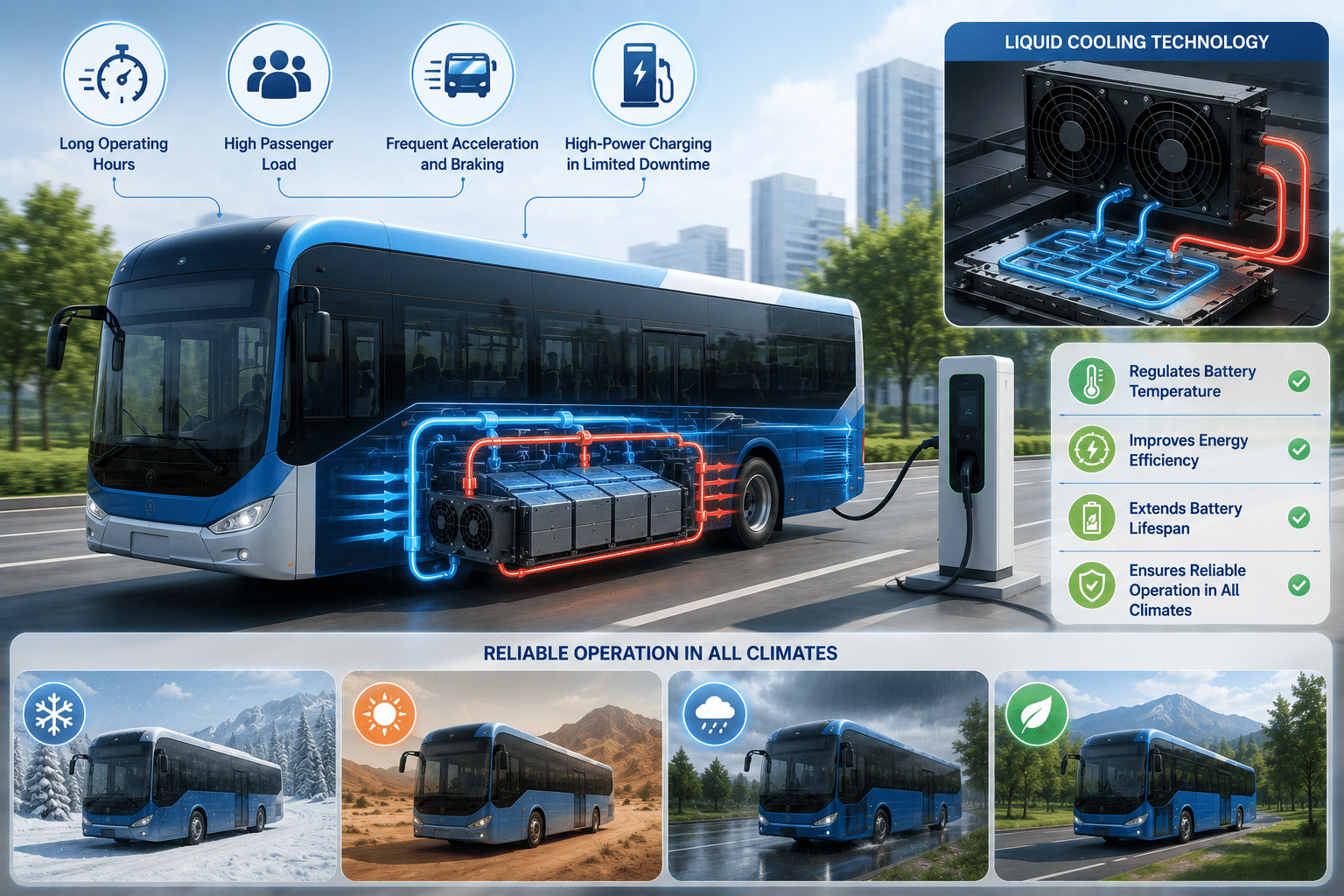
A well-designed battery thermal management system helps regulate battery temperature, improve energy efficiency, extend battery lifespan, and ensure reliable operation in different climates. Among various cooling technologies, liquid cooling has become an increasingly preferred solution for high-performance electric buses due to its excellent heat transfer capability and temperature control performance.
Lithium-ion batteries used in electric buses generate heat during both charging and discharging processes.
When the vehicle accelerates, climbs hills, operates under heavy loads, or performs fast charging, the battery cells experience higher current flow. The internal resistance of battery cells converts part of the electrical energy into heat, causing battery temperature to rise.
If this heat cannot be effectively removed, several performance issues may occur:
For commercial electric buses that operate hundreds of kilometers every day, even small reductions in battery performance can significantly increase operating costs.
Therefore, maintaining battery temperature within an optimal range is essential for maximizing the value of the battery system.

Electric buses require consistent power delivery throughout daily routes. Unlike private vehicles, buses cannot frequently stop for charging or cooling adjustments.
Extreme temperatures can negatively affect battery chemical reactions.
.png)
When battery temperature is too low:
When battery temperature is too high:
A battery thermal management system continuously monitors and adjusts battery temperature, ensuring stable operation even during intensive driving conditions.
For fleet operators, this means fewer performance fluctuations and more predictable vehicle operation.
The battery pack is one of the most expensive components of an electric bus. Extending battery lifespan directly impacts the total cost of ownership (TCO).
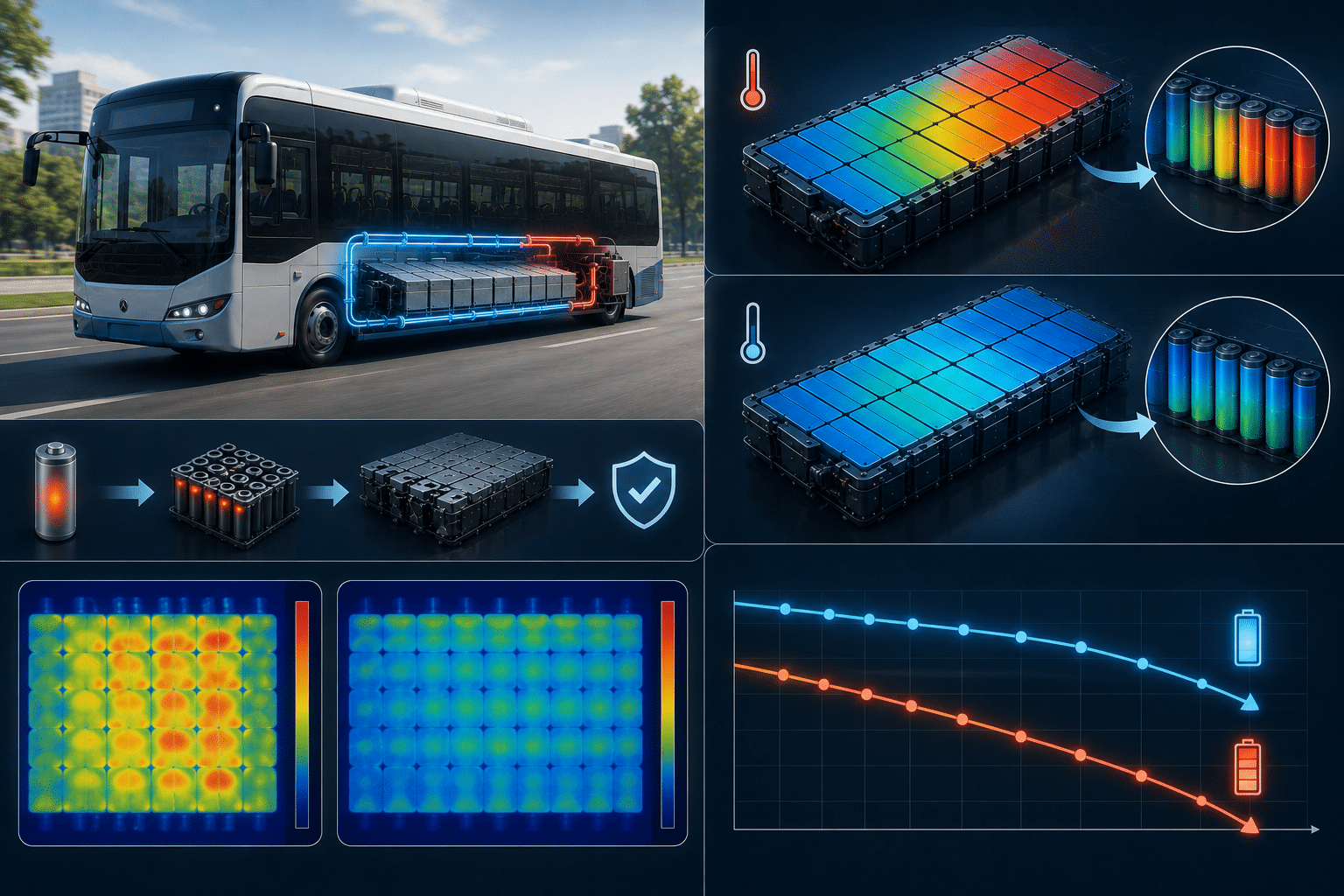
High temperatures are one of the main factors accelerating lithium-ion battery aging. Excessive heat can cause:
A reliable thermal management system reduces temperature differences between individual battery cells and modules.
By maintaining a more uniform temperature distribution, BTMS helps slow battery degradation and allows electric buses to maintain higher performance over a longer period.
For bus operators managing large fleets, improved battery durability means:
Charging efficiency has become a major challenge for electric bus operators.
Many fleets need to charge vehicles quickly during short breaks between operating schedules. However, high-power charging generates significant heat inside battery cells.
Without efficient thermal control, fast charging may:
Liquid cooling battery thermal management systems provide efficient heat removal during high-power charging.
Compared with traditional air cooling solutions, liquid cooling has higher heat transfer efficiency and can maintain more consistent battery temperatures during demanding charging scenarios.
This allows electric bus manufacturers and fleet operators to achieve faster charging while protecting battery health.
Safety is a fundamental requirement for electric buses because they contain large-capacity battery systems.
Battery overheating and uneven temperature distribution can increase risks during extreme operating conditions.
An advanced thermal management system helps improve safety by:
For commercial transportation applications, reliability is especially important because a single vehicle failure can affect passenger services and operational schedules.
Traditional air cooling systems rely on airflow to remove heat. While air cooling can be suitable for some low-power applications, it becomes less effective when battery capacity and charging power continue to increase.
Electric buses require thermal management systems that can handle:
Liquid cooling technology provides several advantages:
Liquid coolant has better heat transfer capability compared with air, allowing heat to be removed more efficiently from battery modules.
Large battery packs contain hundreds or thousands of individual cells. Maintaining similar temperatures between cells is important for battery consistency.
Liquid cooling helps reduce temperature differences across the battery pack, improving overall system performance.
Electric buses operate worldwide, from hot regions with high ambient temperatures to cold environments.
A liquid cooling battery thermal management system can provide more reliable temperature control across different operating environments.
As electric buses continue to evolve toward higher capacity batteries and faster charging technologies, thermal management will become even more important.
Future electric bus development will focus on:
All of these improvements require advanced thermal management technologies.
Battery thermal management is no longer simply a cooling solution. It has become a key technology that determines electric bus efficiency, reliability, and lifecycle value.
For electric bus manufacturers and transportation operators, selecting an efficient liquid cooling battery thermal management system is an important step toward building safer, more reliable, and more cost-effective electric mobility solutions.
If you would like to learn more about battery thermal management, please click the link below.
https://www.tkthvac.com/products/battery-cooling-system1/tkt-battery-thermal-management-system.html


.jpg)
.jpg)