
As electric vehicles continue to expand from passenger cars into commercial transportation, logistics fleets, electric buses, and heavy-duty equipment, battery performance has become one of the most important factors determining vehicle reliability and operating costs.
Unlike traditional fuel-powered vehicles, electric vehicles rely entirely on battery systems for power output. However, battery performance is highly sensitive to temperature changes. Excessive heat can accelerate battery aging, while extremely low temperatures can reduce charging efficiency and driving range.
For commercial EV manufacturers and fleet operators, investing in a reliable Battery Thermal Management System (BTMS) has become essential to maintaining battery safety, extending service life, and improving overall vehicle efficiency.
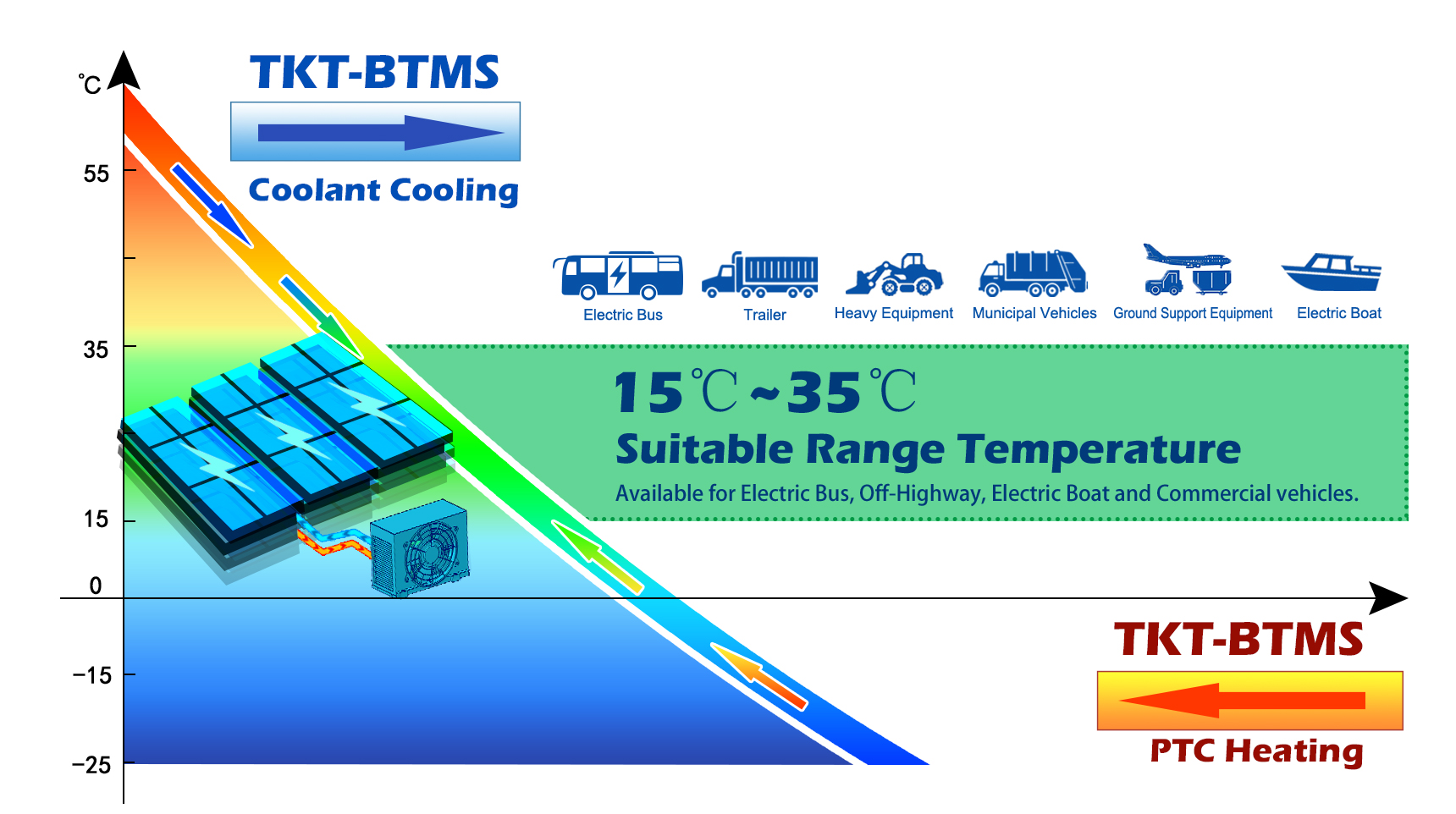
According to TKT’s battery thermal management technology, batteries should operate within an optimal temperature range to maintain stable performance. When battery temperatures become too high, electrochemical aging accelerates; when temperatures are too low, battery output capability decreases significantly.
I.Why Battery Thermal Management Is Critical for Commercial Electric Vehicles
Commercial electric vehicles such as buses, trucks, sanitation vehicles, and heavy-duty equipment often operate under demanding conditions:
.jpg)
These conditions generate significant heat inside battery packs.
Without effective thermal control, EV batteries may experience:
High temperatures accelerate battery degradation, causing capacity loss and reducing the replacement cycle of expensive battery packs.
A professional BTMS helps maintain stable battery temperatures, reducing thermal stress and extending battery service life.
Temperature fluctuations directly affect battery efficiency.
A properly designed battery cooling system keeps cells operating under suitable conditions, helping vehicles maintain consistent range performance during daily operation.
Battery overheating is one of the major concerns in electric vehicle applications.
An advanced thermal management system continuously regulates battery temperature, preventing abnormal heat accumulation and improving vehicle safety.
Traditional air cooling systems rely on airflow to remove heat. However, as commercial EV batteries become larger and more powerful, air cooling may struggle to provide sufficient temperature control.
Liquid cooling technology provides a more efficient solution.
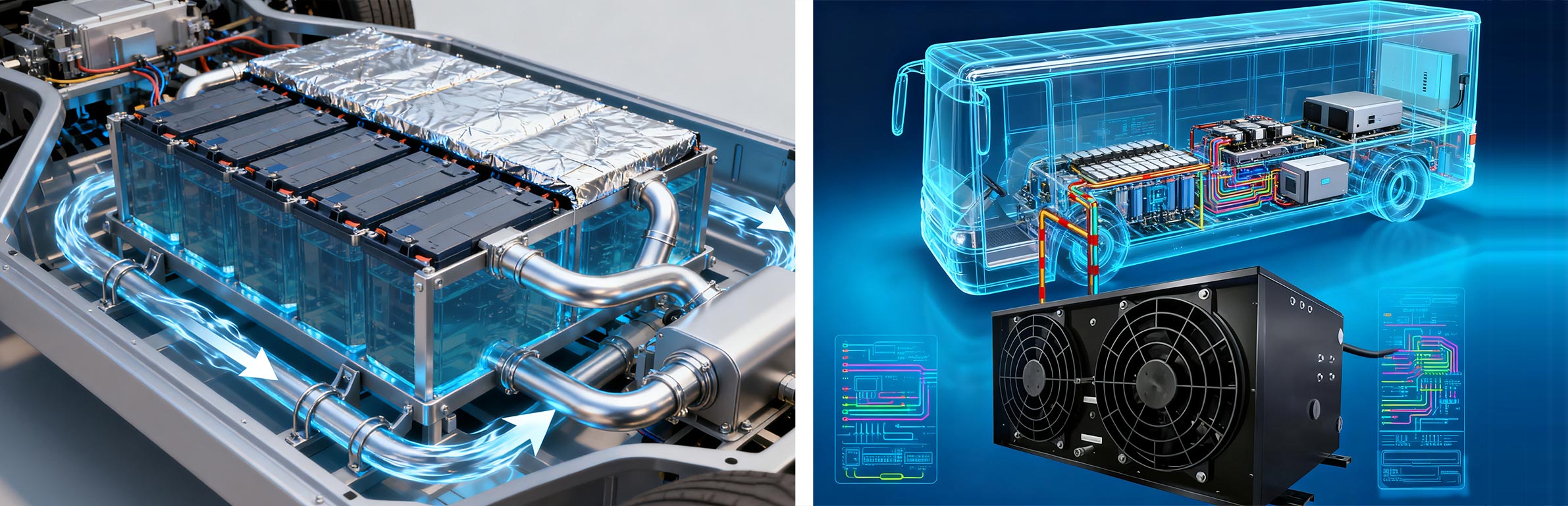
The working principle is simple:
The coolant circulates through the thermal system, absorbs heat from battery components, and transfers heat away through heat exchangers or cooling units.
Compared with air cooling, liquid cooling offers several advantages:
Liquid has better heat transfer capability than air, allowing faster and more precise temperature regulation.
Liquid cooling systems operate with reduced noise levels, improving vehicle comfort for drivers and passengers.
Because liquid cooling provides higher heat transfer efficiency, the system can achieve better performance with a more compact structure.
Efficient thermal management reduces unnecessary energy consumption, helping improve vehicle operating efficiency.
To meet the growing demand for electric commercial vehicles, TKT developed a complete range of Battery Thermal Management System solutions.
The product series covers different cooling capacity requirements, including:
These solutions are designed for various applications including:

The systems support precise temperature regulation from approximately -15℃ to 35℃, helping battery packs maintain stable operation in different environments.
IV.Intelligent Control and Safety Features for Modern EV Platforms
Modern electric vehicles require more than cooling performance. They also need intelligent monitoring and communication capabilities.
TKT BTMS solutions integrate advanced control technologies, including:
The system supports CAN communication, enabling:
This helps vehicle manufacturers achieve smarter thermal management and easier maintenance.
For vehicles operating in cold climates, battery heating is equally important.
TKT BTMS supports optional PTC liquid heating solutions, providing:
This allows vehicles to maintain stable battery performance in both hot and cold environments.
Commercial electric vehicles often operate in challenging environments, including:
TKT BTMS systems are designed with strong environmental adaptability.
The products have passed vibration testing and EMC requirements, helping ensure reliable operation in demanding vehicle applications.
Different electric vehicles have different battery layouts, voltage requirements, and installation spaces.
Therefore, a standard product may not always be the best solution.
TKT provides OEM and ODM customization services, including:
The company provides complete support from requirement analysis, design, prototyping, testing, and commercialization.
When selecting a battery thermal management system supplier, manufacturers should consider:
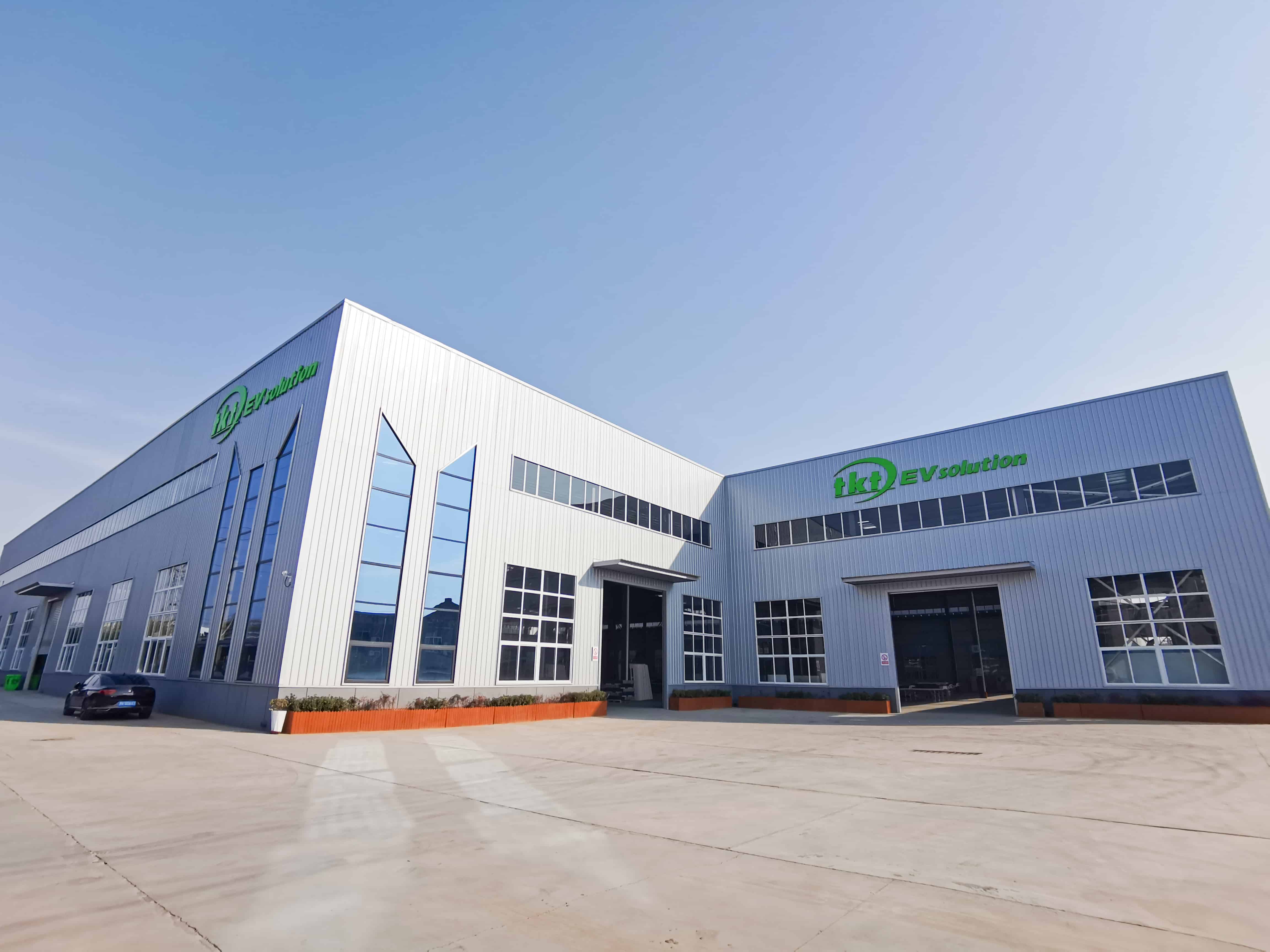
A reliable supplier should have experience in thermal design, testing, and vehicle integration.
EMC testing, vibration testing, and quality management systems are important indicators of product reliability.
Different vehicle platforms require different thermal solutions.
A supplier with OEM/ODM capability can provide better long-term support.
For global commercial vehicle projects, technical support and service capability are essential.
TKT has developed EV thermal control solutions and provides OEM services for global automotive manufacturers, supported by ISO 9001:2015 and IATF 16949:2016 certified manufacturing capabilities.
As electric buses, trucks, and commercial vehicles continue to grow worldwide, battery thermal management technology will play an increasingly important role.
A reliable BTMS not only improves battery safety but also enhances vehicle efficiency, extends battery lifespan, and reduces long-term operating costs.
For EV manufacturers, fleet operators, and system integrators looking for a professional thermal management partner, choosing the right Battery Thermal Management System is a key step toward building safer and more efficient electric transportation solutions.
.png)


.jpg)
.jpg)