As electric vehicles (EVs) continue to move from passenger cars into commercial applications such as electric buses, logistics trucks, sanitation vehicles, and heavy-duty equipment, battery thermal management has become a critical factor affecting vehicle performance, safety, and battery lifespan.
The battery is the most valuable and important component of an electric vehicle. However, battery cells generate heat during charging and operation. If this heat is not effectively controlled, it can accelerate battery aging, reduce driving range, and impact overall vehicle reliability.
To solve these challenges, EV manufacturers mainly use two battery cooling approaches:
- Air Cooling Battery Systems
- Liquid Cooling Battery Systems
Both technologies have their own advantages and application scenarios. However, with the increasing power demands of modern electric vehicles, liquid cooling technology is becoming the preferred solution for many commercial EV applications.
I.Why Does EV Battery Thermal Management Matter?
Lithium-ion batteries perform best within a specific temperature range. When battery temperatures become too high, chemical reactions inside the battery accelerate, causing faster degradation and reduced service life.
On the other hand, when temperatures are too low, battery performance decreases, affecting:
- Charging speed
- Driving range
- Power output
- Energy efficiency
For commercial electric vehicles that operate for long hours and carry heavy loads, maintaining stable battery temperature is especially important.
A professional Battery Thermal Management System (BTMS) helps regulate battery temperature, ensuring that battery packs operate under optimal conditions.
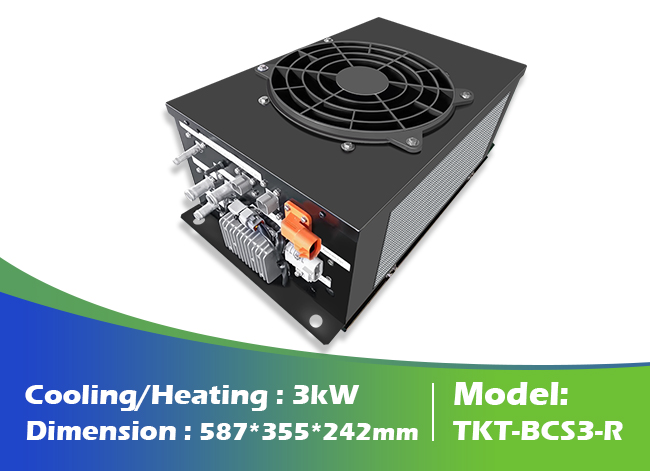
TKT’s BTMS solutions are designed to maintain battery temperature stability, improve battery performance, and extend service life for electric commercial vehicles. The system is developed based on the requirement that batteries need controlled operating temperatures to avoid accelerated aging and performance loss.
II.What Is an Air Cooling Battery System?
An air cooling battery system uses air circulation to remove heat generated by battery cells.
The basic working principle is:
- Air flows through the battery pack.
- The airflow absorbs heat from battery components.
- Hot air is discharged outside the battery system.
Air cooling systems are relatively simple and have been widely used in early electric vehicles.
1.Advantages of Air Cooling
①Simple Structure
Air cooling systems require fewer components compared with liquid cooling systems.
They usually have:
- Fans
- Air ducts
- Ventilation channels
This makes the system easier to design and maintain.
②Lower Initial Cost
Because of the simpler structure, air cooling systems generally have lower manufacturing costs.
For vehicles with smaller battery packs and lower power requirements, air cooling can still be a practical solution.
③Easy Maintenance
Air cooling systems do not require coolant circulation systems, reducing maintenance complexity.
2.Limitations of Air Cooling Battery Systems
Although air cooling is suitable for some applications, it has several limitations when used in high-performance electric vehicles.
①Lower Heat Transfer Efficiency
Air has a much lower heat transfer capacity compared with liquid.
When battery packs become larger and generate more heat, air cooling may struggle to maintain consistent temperatures.
②Uneven Temperature Distribution
Because airflow paths vary inside battery packs, some cells may experience different cooling effects.
Temperature differences between battery cells can reduce battery consistency and lifespan.
③Higher Noise Levels
Air cooling relies heavily on fans to move air.
For commercial vehicles operating continuously, fan noise can become an additional concern.
III.What Is a Liquid Cooling Battery System?
A liquid cooling battery system uses coolant to absorb and transfer heat away from battery cells.
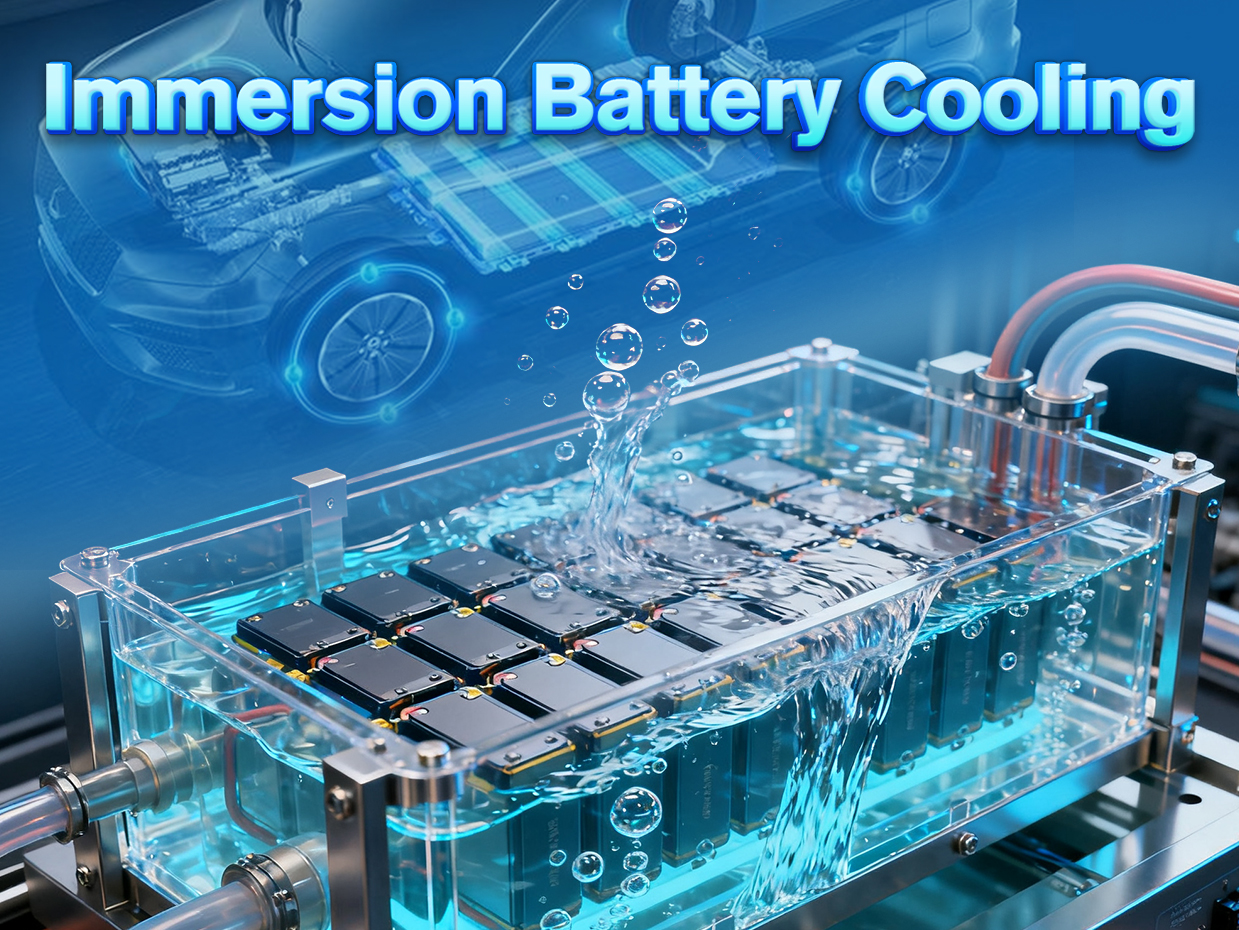
The working process includes:
- Coolant flows through cooling plates or channels near battery cells.
- Heat transfers from battery cells to the coolant.
- The heated coolant moves to a heat exchanger.
- The heat is released through the cooling unit.
Compared with air cooling, liquid cooling provides more efficient heat management.
TKT’s liquid cooling BTMS technology uses coolant circulation to maintain battery temperature stability and improve thermal control efficiency.
1.Advantages of Liquid Cooling Battery Systems
①Higher Cooling Efficiency
The biggest advantage of liquid cooling is superior heat transfer performance.
Liquids have higher heat capacity than air, allowing the system to remove heat faster and maintain more accurate temperature control.
This is especially important for:
- Electric buses
- Electric trucks
- Heavy-duty vehicles
- High-power EV applications
TKT’s BTMS solutions provide precise temperature regulation and support multiple cooling capacities from 3kW to 10kW for different vehicle requirements.
②Better Battery Life Protection
Battery degradation is strongly affected by temperature.
A liquid cooling system helps maintain a more stable temperature environment, reducing thermal stress on battery cells.
Benefits include:
- Longer battery lifespan
- More stable performance
- Reduced replacement costs
③Improved Safety
For large battery packs used in commercial EVs, controlling heat is essential.
Liquid cooling systems provide more precise temperature management, helping reduce the risk caused by overheating.
④Compact and Lightweight Design
Because liquid cooling transfers heat more efficiently, the system can achieve better performance with a compact structure.
TKT BTMS products feature lightweight and compact designs, reducing vehicle installation burden while supporting flexible mounting options such as roof or chassis installation.
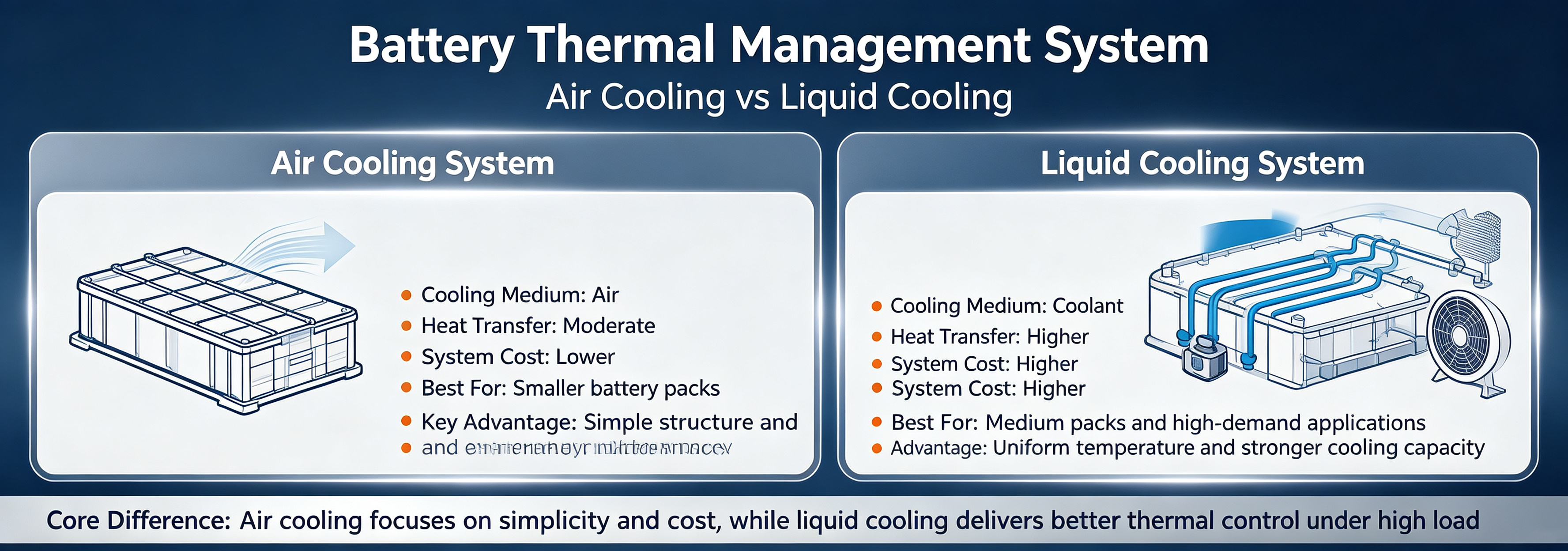
Liquid Cooling vs Air Cooling: Key Differences
| Comparison |
Air Cooling Battery System |
Liquid Cooling Battery System |
| Cooling Method |
Air circulation |
Coolant circulation |
| Heat Transfer Efficiency |
Medium |
High |
| Temperature Control Accuracy |
Lower |
Higher |
| Suitable Battery Size |
Small/medium battery packs |
Medium/large battery packs |
| High Power Applications |
Limited |
Excellent |
| Noise Level |
Higher due to fans |
Lower |
| System Complexity |
Simple |
More advanced |
| Commercial EV Suitability |
Limited |
Highly suitable |
IV.Why Commercial EV Manufacturers Prefer Liquid Cooling Systems
Commercial electric vehicles face more demanding operating conditions than passenger vehicles.
For example:
- Electric buses operate many hours every day.
- Logistics trucks carry heavy loads.
- Sanitation vehicles work in extreme outdoor environments.
These applications require:
- Stable battery performance
- Long operating life
- Reliable thermal control
- Reduced maintenance costs
Liquid cooling battery systems provide the performance required for these demanding applications.
TKT BTMS products are designed for electric buses, heavy-duty trucks, electric sanitation vehicles, and other commercial electric equipment applications.
Additional Advantage: Liquid Cooling with PTC Heating Function
A complete thermal management solution should not only cool batteries but also support cold-weather operation.
In low-temperature environments, batteries may lose efficiency and require heating.
TKT BTMS systems can be equipped with optional PTC liquid heaters, supporting:
- Cooling operation
- Heating operation
- Standby mode
- Self-circulation mode
This allows electric vehicles to maintain reliable performance in different climates.
V.How to Choose Between Air Cooling and Liquid Cooling?
The right cooling solution depends on vehicle requirements.
1.Air Cooling May Be Suitable For:
- Small battery packs
- Low-power EV applications
- Short-distance vehicles
- Cost-sensitive projects
2.Liquid Cooling Is Recommended For:
- Electric buses
- Electric trucks
- Fleet vehicles
- Long-range EVs
- High-power commercial vehicles
For manufacturers developing next-generation electric commercial vehicles, liquid cooling provides better scalability and reliability.
VI.Choosing the Right EV Battery Thermal Management Partner
When selecting a BTMS supplier, EV manufacturers should evaluate:
.jpg)
①Engineering Capability
The supplier should have experience in thermal design, testing, and vehicle integration.
②Product Reliability
Testing capabilities such as EMC testing and vibration testing are important for commercial vehicle applications.
③Customization Ability
Different vehicles require different voltage levels, cooling capacities, and installation structures.
TKT provides OEM/ODM thermal management solutions with customized design support, including cooling capacity, voltage range, dimensions, and heating options.
Conclusion
Air cooling remains a simple and economical solution for some electric vehicles. However, as battery capacity increases and commercial EV applications become more demanding, liquid cooling battery systems offer clear advantages in efficiency, temperature control, safety, and long-term reliability.
For electric buses, trucks, and heavy-duty vehicles, selecting an advanced liquid cooling Battery Thermal Management System can significantly improve vehicle performance and reduce lifecycle costs.
As the EV industry continues to grow, efficient thermal management will become one of the key technologies driving safer, longer-lasting, and more reliable electric transportation.
.png)



.jpg)
.jpg)