
For public transportation operators, tourism companies, school bus operators and electric vehicle manufacturers, passenger comfort is a key factor influencing vehicle operation and customer satisfaction. A reliable bus air conditioner is no longer merely an optional accessory, as it directly affects passenger and driver comfort, energy consumption and long-term operating costs. Nevertheless, selecting an appropriate bus air conditioning system can prove challenging since requirements vary by bus size, operating environment, passenger capacity and power system. An ill-suited system may lead to inadequate cooling performance, high energy consumption, frequent maintenance, lower vehicle efficiency and unsatisfactory passenger experience, and this guide outlines the core factors enterprises need to evaluate when purchasing bus air conditioning systems.

For fleet businesses whose air conditioning systems run long hours each day, a high-quality bus AC system delivers multiple benefits: it boosts passenger comfort by maintaining steady cooling to meet passengers’ demand for pleasant temperatures during hot summers, long-distance travel, tourism and urban commutes, thereby lifting customer satisfaction and service quality; it cuts operating costs by lowering power consumption and maintenance frequency as well as extending the driving range of electric buses; and it enhances vehicle reliability, with durable units offering consistent cooling performance, a long service life, simple maintenance and dependable components.
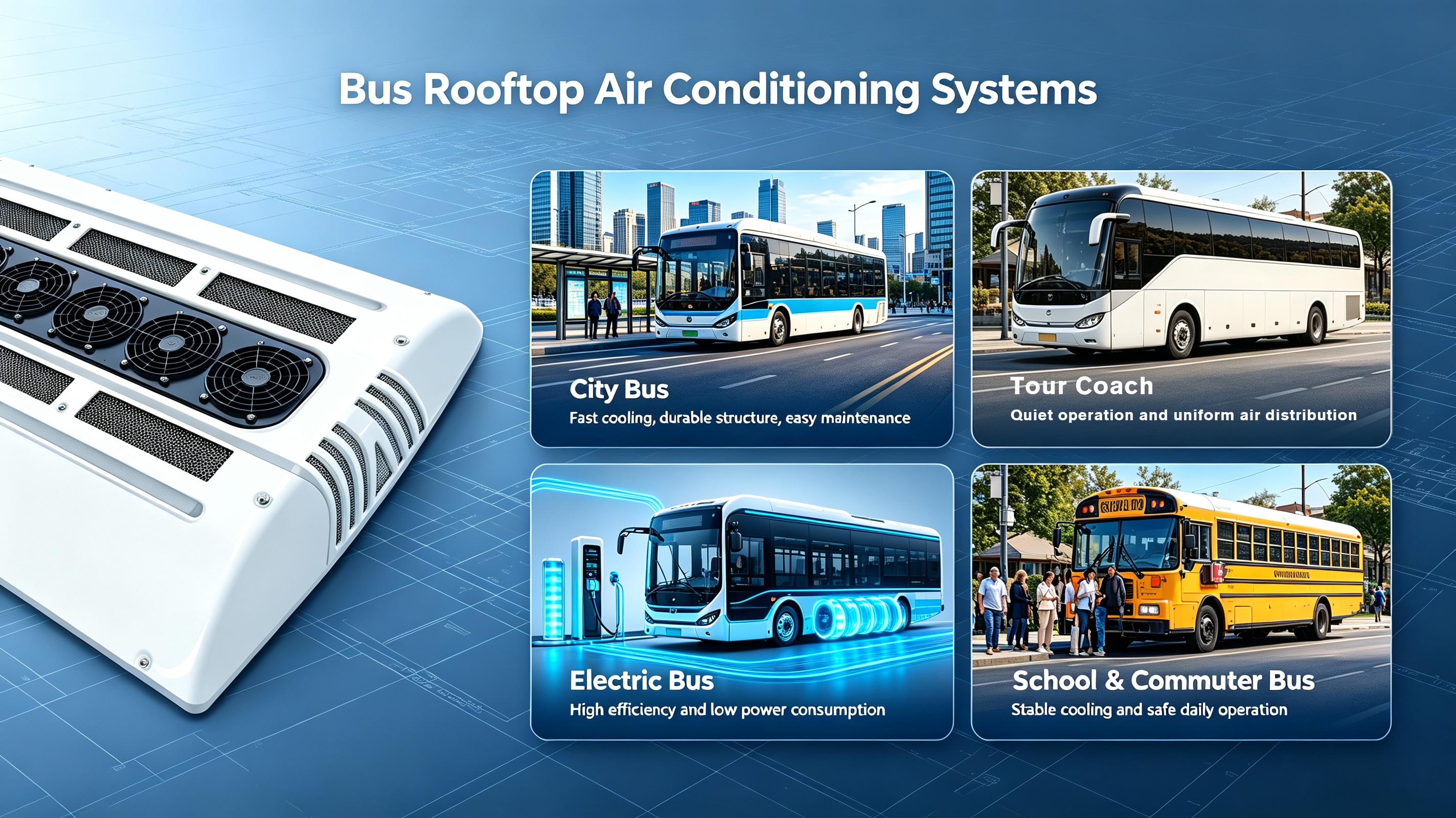

The first step is to understand the bus’s operating location and mode, since different applications demand different air conditioning solutions.
①City Bus and Public Transportation
City buses generally operate for long hours daily with frequent stops and high passenger turnover, requiring fast cooling, energy efficiency, high durability and easy maintenance, so powerful rooftop bus air conditioners are widely adopted for these large passenger vehicles.
②Tourism and Coach Buses
Tour buses demand higher passenger comfort as passengers stay onboard for extended periods; key considerations include quiet operation, even air distribution and comfortable temperature regulation, and a reliable coach air conditioner can effectively enhance the travel experience.
③Electric Buses
Electric buses have different requirements from traditional fuel buses. Since the air conditioning system directly draws power from the battery, operators should prioritize low power consumption, high efficiency, battery compatibility and intelligent control systems, as an efficient electric bus air conditioner can extend driving range and boost overall vehicle efficiency.
④School Buses and Shuttle Buses
School and shuttle buses generally require stable cooling performance, safe operation and easy maintenance, and the selected air conditioning system should match vehicle dimensions and daily operating conditions.

Multiple types of bus air conditioning systems are available, and the suitable selection depends on vehicle size, power requirements and operating environment.
.jpg)
①Rooftop Bus Air Conditioner
Rooftop systems are widely adopted in commercial buses, featuring a space-saving design, efficient airflow distribution and simple installation, making them ideal for large vehicles such as city buses, coaches and electric buses.
②Integrated Bus AC System
Integrated systems assemble multiple components into a complete solution; they feature a compact structure and superior system integration, making them suitable for customized vehicles and frequently applied to new energy buses and special commercial vehicles.
③Electric Bus Air Conditioner
Electric AC systems are specially developed for electric vehicles. Featuring independent operation and lower energy consumption while being compatible with EV power systems, they are gaining growing popularity alongside the global expansion of electric buses.

When purchasing a bus air conditioner, businesses should evaluate the following specifications.
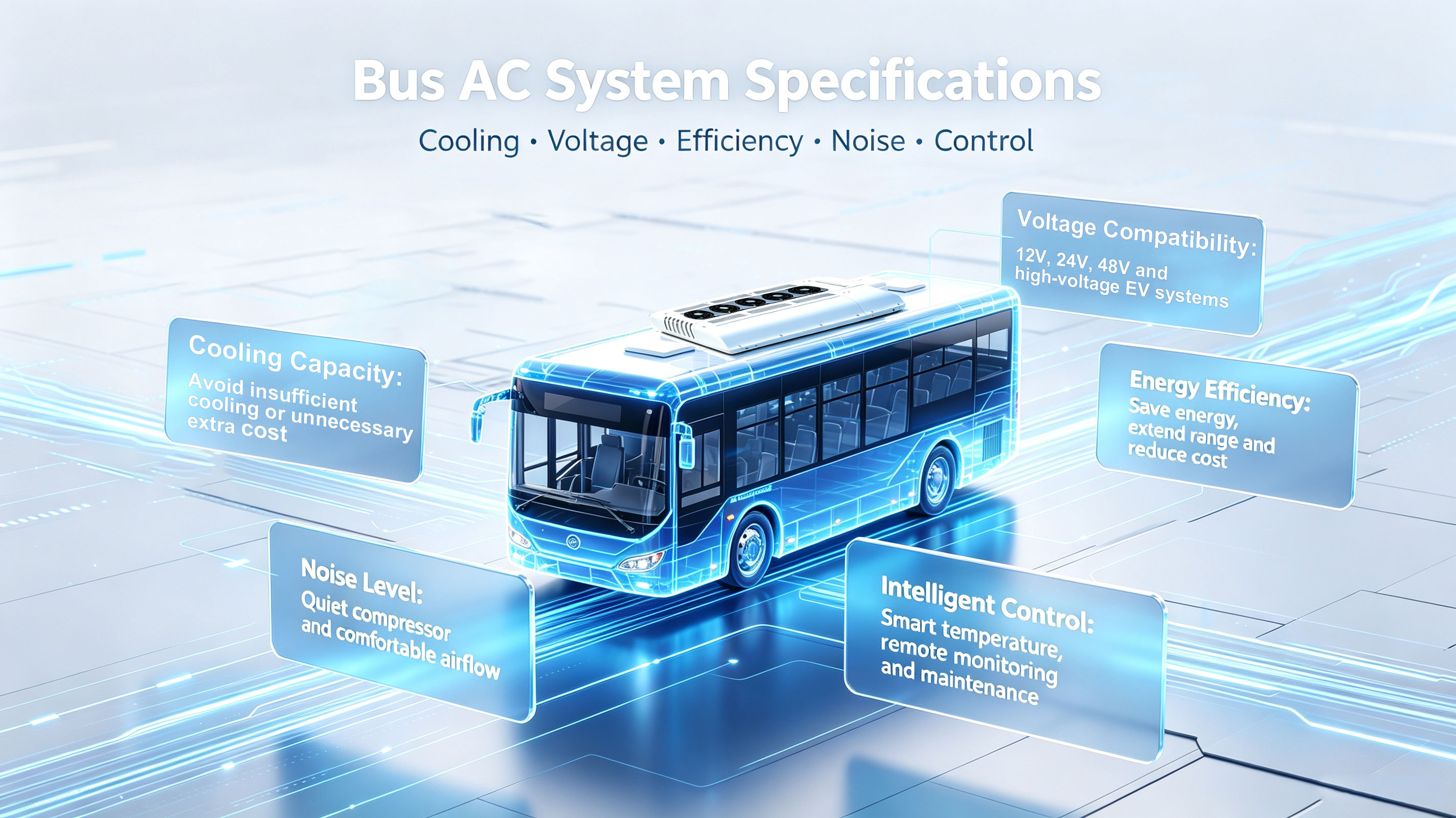
①Cooling Capacity
Cooling capacity stands as one of the most critical factors, and the appropriate level depends on bus length, passenger capacity, climate conditions, window area and operating environment. For instance, small shuttle buses generally require lower cooling capacity whereas large coaches need higher-capacity systems; selecting a unit with inadequate cooling power results in uncomfortable cabin temperatures, while overcapacity will bring unnecessary extra costs.
②Voltage Compatibility
Commercial vehicles are equipped with different electrical systems, so buyers need to confirm vehicle voltage, battery system and controller compatibility before purchase, with common voltage specifications covering 12V, 24V, 48V and high-voltage EV systems.
③Energy Efficiency
Energy efficiency has a direct impact on operating costs, and a high-efficiency bus air conditioning system can cut power consumption, extend vehicle range and reduce operational expenses, which is particularly vital for electric buses.
④Noise Level
Low noise is an important consideration for passenger vehicles, and a high-quality bus air conditioner delivers quiet compressor operation and stable airflow to create a comfortable riding environment for passengers.
⑤Intelligent Control System
Modern bus air conditioning systems are increasingly equipped with smart functions such as automatic temperature control, remote monitoring, fault diagnosis and energy management, and intelligent control enables fleet operators to boost efficiency and cut maintenance costs.
 Choosing the right supplier is critical for fleet projects.
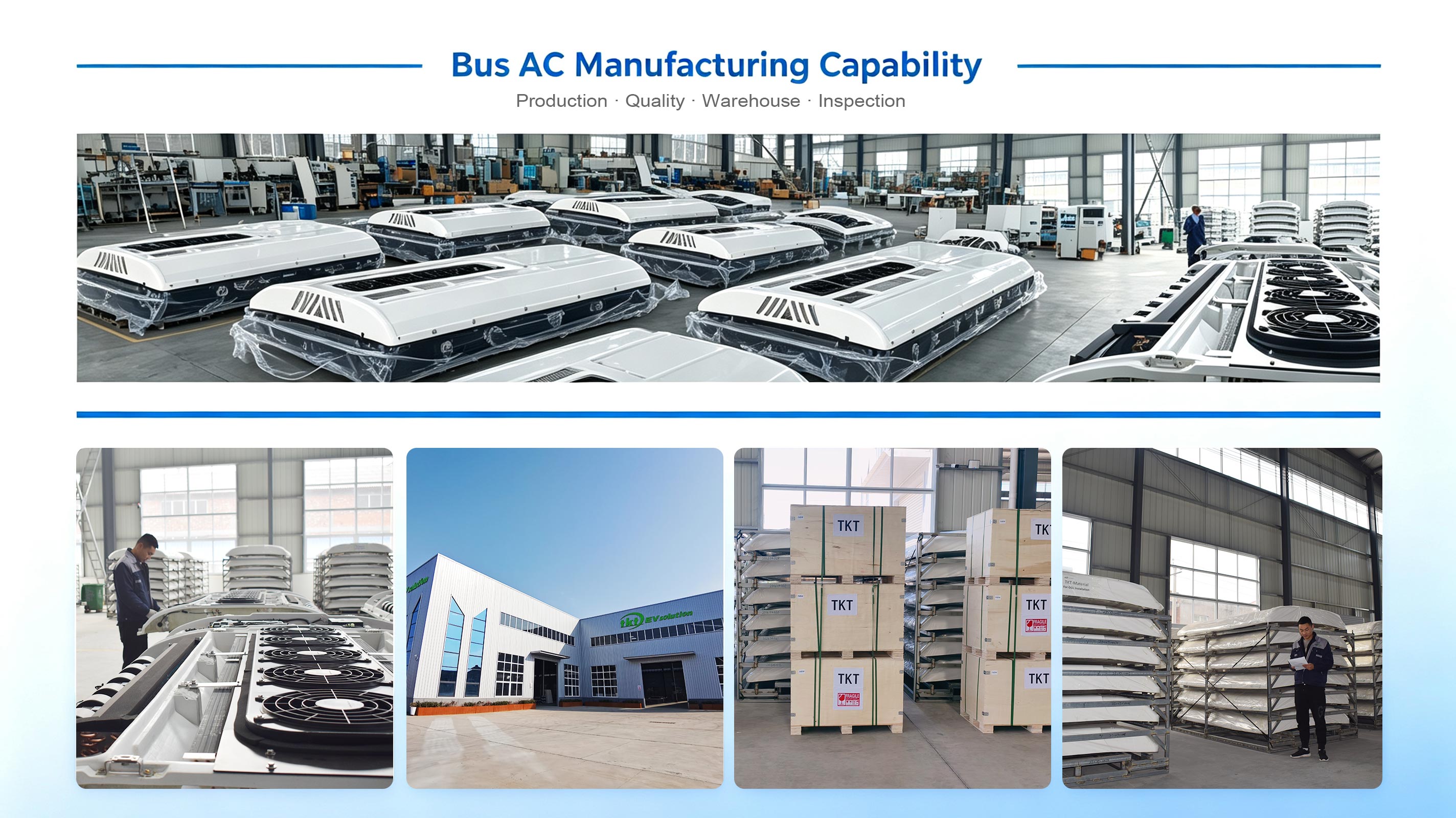 A professional bus AC supplier should provide:
①Strong Manufacturing Capability
Before cooperation, buyers should verify the manufacturer’s production experience, factory capacity, quality control system and product testing process, as a reliable supplier can better support bulk orders and customized requirements.
②Customization Ability
As different buses feature distinct designs, professional suppliers ought to offer support covering various vehicle models, customized cooling solutions, installation guidance and technical assistance.
③After-Sales Service
Commercial vehicles cannot sustain lengthy downtime, so a dependable supplier should provide installation support, maintenance guidance, spare parts supply and technical assistance.
 Many buyers only focus on the upfront price of equipment, yet the overall cost encompasses purchase fees, installation expenses, energy consumption, maintenance charges and replacement parts; a lower-priced air conditioner may lead to greater long-term costs if it suffers from high energy consumption, frequent breakdowns and complicated maintenance.
For fleet operators, reliability and efficiency are generally more important than the lowest upfront price. Looking at future trends in the bus air conditioning industry, the sector is shifting toward smarter and more efficient solutions, covering three major directions: higher energy efficiency as manufacturers develop systems with upgraded compressors, optimized heat management and reduced power consumption; wider application in electric vehicles, where rising numbers of electric buses continuously boost demand for high-efficiency electric bus air conditioners; and intelligent fleet management, with growing numbers of commercial fleets deploying smart systems to realize remote monitoring, predictive maintenance and energy optimization.
Conclusion
Selecting a suitable bus air conditioning solution for your business needs involves more than simply comparing prices; fleet operators must take into account vehicle type, cooling requirements, energy efficiency, installation conditions and supplier capabilities. Whether you run city buses, tour coaches, electric buses or commercial fleets, partnering with a reliable bus AC supplier helps enhance passenger comfort, cut operating costs and sustain long-term fleet operation, because a professional bus air conditioning system is far more than a cooling unit — it serves as a vital component of efficient, comfortable transportation solutions.



.jpg)
.jpg)