
With the rapid popularization of electric vehicles, long-distance travel has become one of the most frequent usage scenarios. Currently, the limited number of motorway EV charging infrastructure is a factor restricting the development of the electric vehicle industry. Unlike home charging and urban public charging, motorway EV charging has much stricter requirements for charging efficiency and stability. Only high-performance charging equipment can meet the needs of electric vehicle users for quickly replenishing energy during long-distance driving.
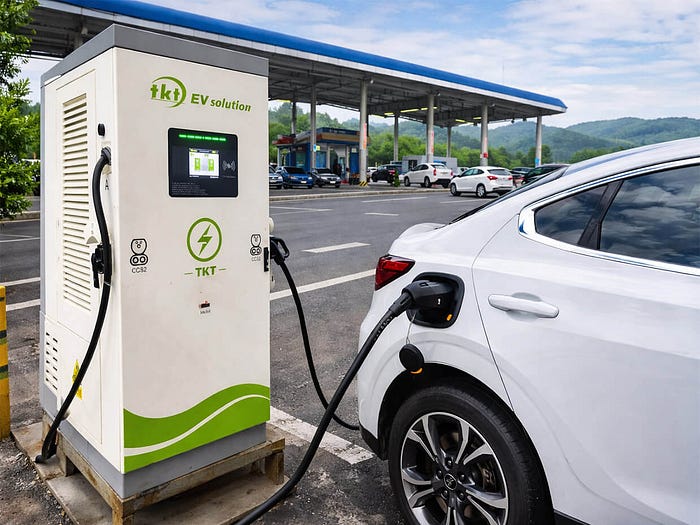
Motorway EV Charging, or highway electric vehicle charging, refers to a charging infrastructure system deployed at highway service areas, interchanges, gas stations, and other nodes in the highway network, specifically designed to provide charging services for long-distance travel of new energy vehicles. It is an important sub-segment of public charging.
It differs from home charging and urban public charging in that it is highly suitable for the short dwell times of vehicles, and is a core component in addressing the range anxiety of new energy vehicle owners on long journeys and improving the nationwide charging network.
The core reasons are concentrated in three points, which are also determined by the rigid demands of highway travel:
1. Short Stop Time: New energy vehicle owners typically only stay in highway service areas for 10–30 minutes, such as restroom breaks, rest, or meals. AC slow charging can only add about 0.5 kilometers of range per minute, which is almost ineffective for short stops. DC fast charging, especially the TKT 320kW, can add 20 kilometers of range per minute, replenishing 80% of the battery in a short time.
2. Improved Station Operation Efficiency: During holidays and peak hours, highway service areas experience a surge of charging vehicles. AC slow charging takes a long time per parking space, easily causing congestion and long queues. DC fast charging has extremely high turnover efficiency, requiring only 10–20 minutes to fully charge a vehicle, maximizing the use of limited parking resources in service areas.
3. Coverage of All Vehicle Types: The highway network includes not only passenger cars but also commercial vehicles such as electric trucks and electric tour buses. These vehicles have large battery capacities and urgent charging needs, which AC slow charging cannot meet for long-distance operation.
The value of AC slow charging on highways: It is only suitable for users who rest and stay overnight at highway service areas.
The original article contains more information, please click here.


.jpg)
.jpg)