
The copper-tube and aluminum-fin core is the primary heat-exchange component. It belongs to heat exchangers for bus air conditioning. This core serves buses and specialty vehicle systems. It consists of two main parts: copper tubes and aluminum fins. The copper tubes serve as the conduit for the refrigerant, withstanding pressure and transporting the fluid as it circulates within. The aluminum fins are made of thin aluminum foil. They fit tightly around the copper tubes. They enlarge the surface area for heat dissipation. During operation, refrigerant flows inside the copper tubes. Heat transfers from tubes to the aluminum fins. A fan pushes air over these fins. This speeds up heat absorption or dissipation. The copper tubes carry refrigerant. The aluminum fins boost heat-exchange area. Together, they deliver efficient heat exchange.
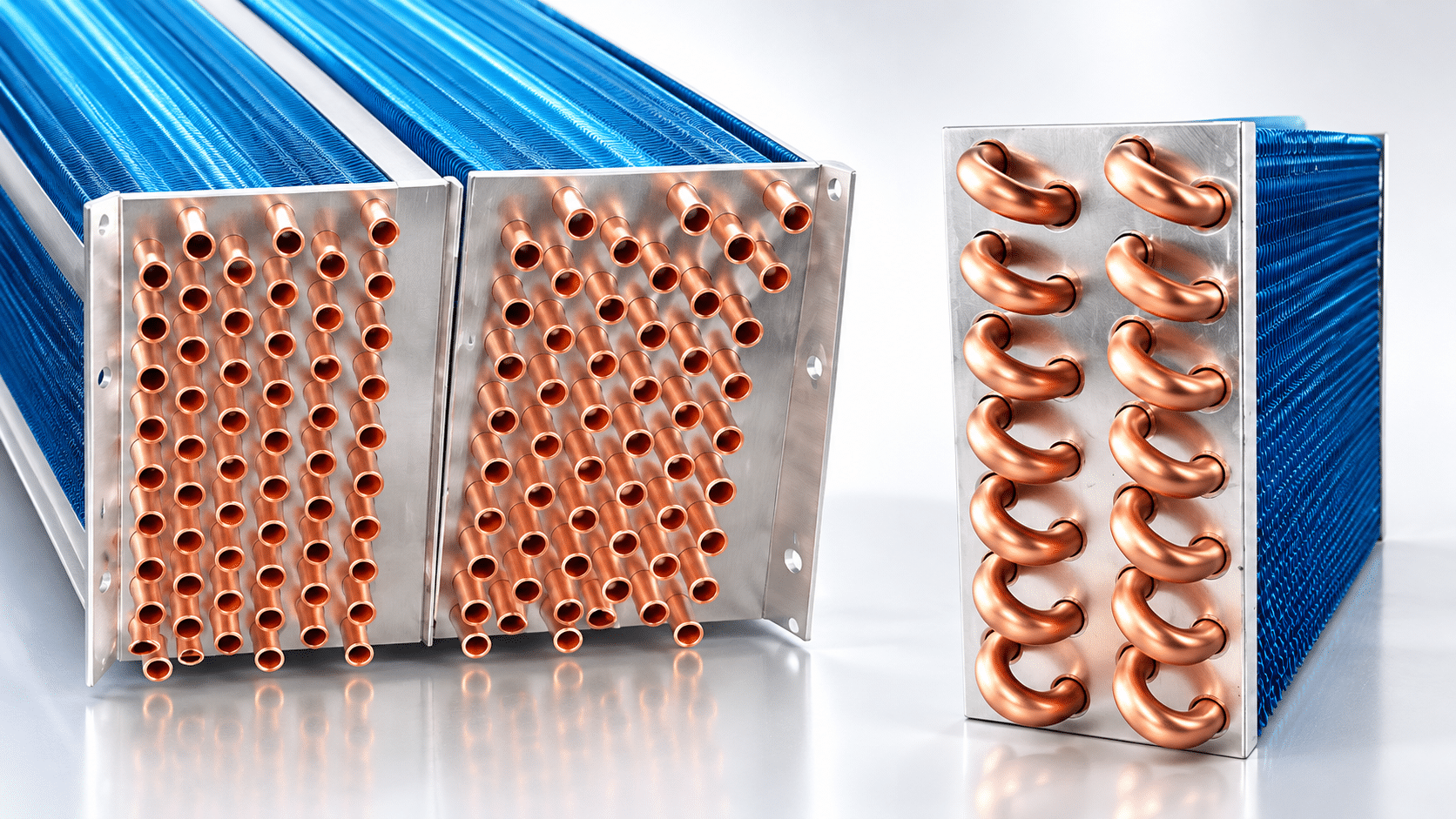
Copper tubes serve as the conduit for the refrigerant, allowing it to circulate within the system. They have high mechanical strength. They handle pressure changes in bus air conditioning systems. They resist cracks on bumpy long bus rides. Copper delivers great thermal conductivity. It also fights pitting corrosion well. It rarely forms pinhole leaks in tough environments. These environments include dusty and saline-alkali sites. This keeps refrigerant transport stable and reliable.
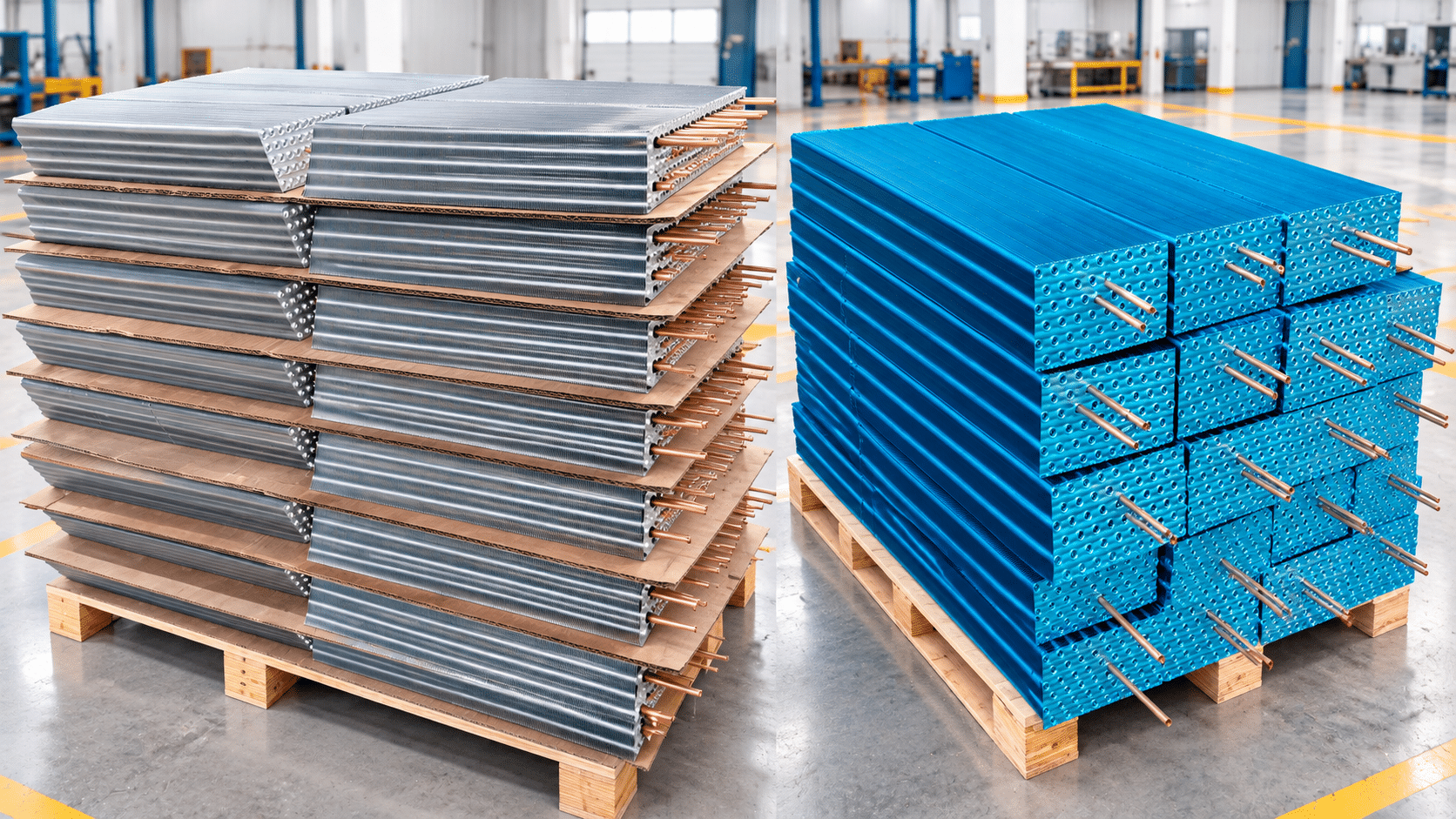
First, aluminum fins are thin aluminum foil sheets on copper tube outer walls. Moreover, they greatly expand the surface area for heat exchange. Next, aluminum conducts heat quickly from the copper tubes. Meanwhile, a fan moves air across fins to release this heat. Additionally, fin surfaces may get anti-corrosion and hydrophilic coatings. Specifically, these coatings reduce harm from dust and water buildup. Finally, they keep steady thermal performance over time.

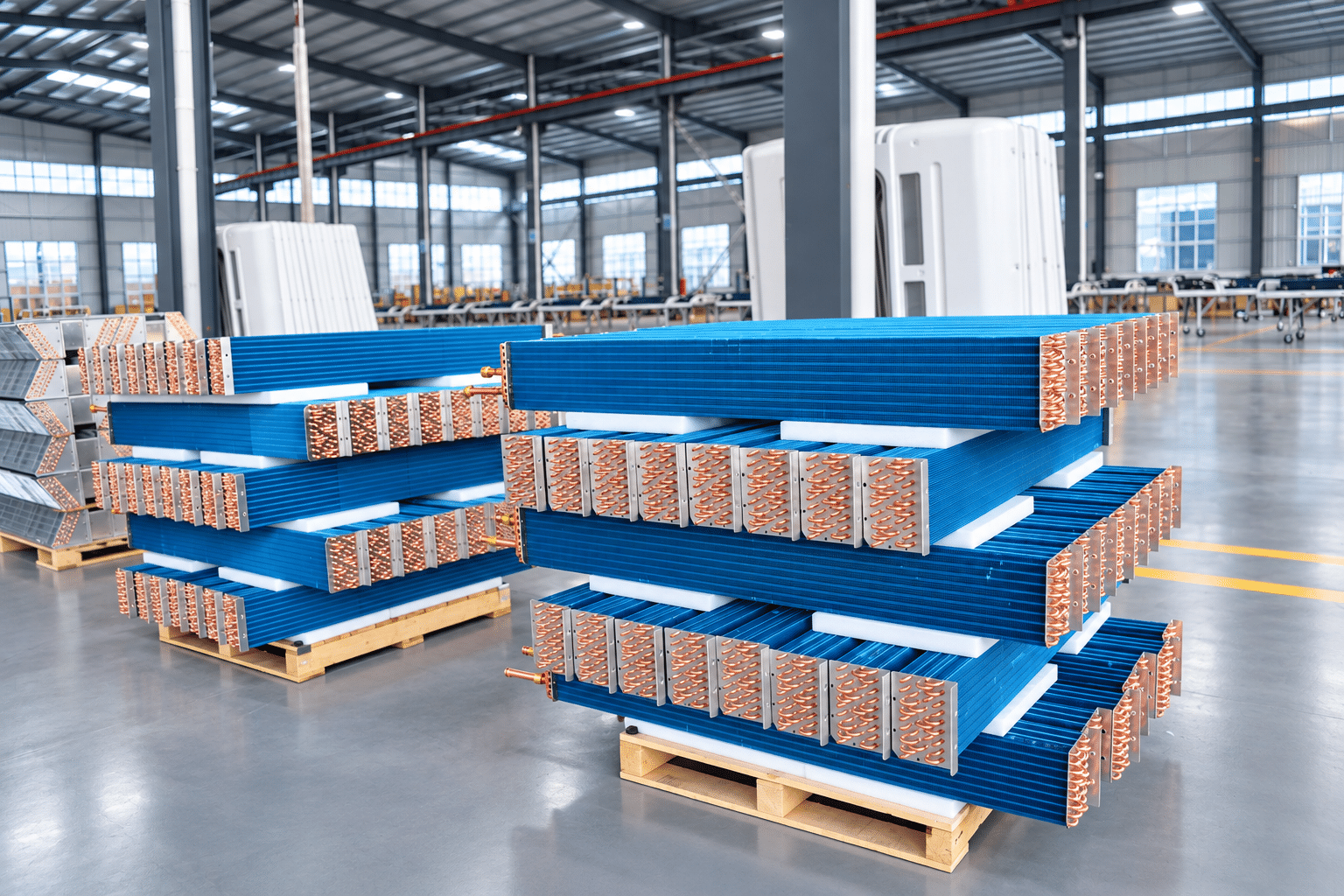
For one thing, refrigerant flows through the copper tubes. Subsequently, heat transfers to these copper tubes. Thereafter, it quickly reaches the dense aluminum fins. Simultaneously, fan airflow moves through the fins. As a result, it supports efficient heat transfer between air and refrigerant. On top of that, copper tubes carry refrigerant reliably. In addition, they resist corrosion and vibration. Ultimately, aluminum fins maximize heat exchange efficiency.
Copper tubing offers superior resistance to pitting corrosion.It rarely forms tiny pinhole leaks. Dust, salt or road salt may damage other parts. These hazards come from harsh working environments.This prevents refrigerant leakage, reduces the likelihood of sudden air conditioner failure, and extends the unit's overall service life.
2. Vibration and pressure resistance, ideal for the bumpy ride of buses
Buses face continuous vibration while traveling on roads. This causes pressure changes inside the AC system. Copper tubes have great mechanical strength. opper tubes resist cracks under heavy vibration. This material supports stable system operation for buses. Such components suit specialty vehicles in long vibration conditions. The design lowers the risk of damage to pipelines.
Aluminum fins significantly increase the heat dissipation surface area and facilitate rapid heat conduction. The system works well in high-temperature environments. The system sustains steady heat exchange in hot surroundings. It delivers effective cooling for the bus cabin. Significant cooling performance drops will not happen.
The copper-tube aluminum-fin core supports targeted minor repairs.It handles small impact damage or local corrosion well.All-aluminum micro-channel cores differ greatly.They usually need full replacement once perforated.This repairable design benefits bus fleet operators.It cuts spare parts costs for fleet managers.It also reduces losses from vehicle downtime.
Thanks to their excellent corrosion resistance, vibration tolerance, and stable heat exchange performance, air conditioning cores featuring copper tubes and aluminum fins are well-suited for vehicles operating under demanding conditions. They are primarily used in air conditioning systems for various buses—including city buses, long-distance coaches, and tourist buses—as well as in specialized vehicles such as mining equipment and desert engineering machinery. These cores are particularly ideal for vehicles operating in environments characterized by Gobi deserts, high dust levels, saline-alkali soil, or regions where de-icing salt is applied in winter. In such environments, salt and dust can easily corrode heat exchangers; while standard all-aluminum cores are prone to corrosion-induced perforation, copper-tube/aluminum-fin cores offer distinct advantages through their superior corrosion resistance and the capability for localized repairs.
.png)


.jpg)

.jpg)